
Bird Watching Adventures Moffat County
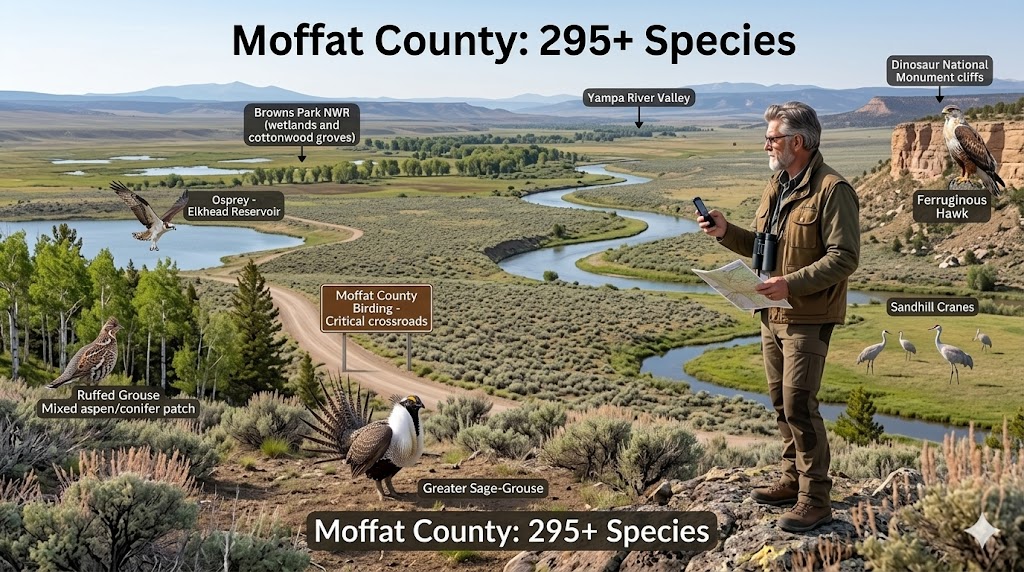
Tucked into the rugged northwestern corner of the state, Moffat County is Colorado’s second-largest county by landmass—but one of its best-kept secrets for bird watching. Because it spans a massive variety of untouched landscapes, it serves as a critical biological crossroads.
Nearly 295 distinct bird species have been recorded here. Whether you are chasing elusive high-desert specialists, tracking massive raptors, or looking for rare waterfowl, Moffat County offers a raw, uncrowded birding experience that easily rivals the state’s more famous mountain destinations.
The Major Birding Hotspots
Moffat County’s unique draw is its sheer diversity of ecosystems, shifting rapidly from lush river valleys to arid sagebrush plains and pinyon-juniper woodlands.
1. Browns Park National Wildlife Refuge
An absolute oasis hidden within an otherwise arid landscape, this refuge sits along the Green River in the far northwest corner of the county. The sprawling wetlands and lush cottonwood groves make it a prime magnet for migratory birds.
What to look for: Yellow-breasted Chats, Willow Flycatchers, American White Pelicans, and a massive variety of ducks and shorebirds.
The Highlight: Taking the auto-tour route or walking the trails near the historic Swinging Bridge.
2. The Yampa River Valley & Loudy-Simpson Park
Right in Craig (the county seat), the Yampa River provides vital riparian (riverbank) habitat. Loudy-Simpson Park offers easy walking trails through mature cottonwood stands right along the water.
What to look for: Sandhill Cranes, Bald Eagles, Great Blue Herons, Lewis’s Woodpeckers, and a vibrant rush of colorful warblers and flycatchers during spring migration.
3. Elkhead Reservoir State Park
Located on the eastern edge of the county, this large reservoir serves as a major rest stop for migrating waterbirds.
What to look for: Western and Clark’s Grebes, American Avocets, Black-necked Stilts, Osprey, and various terns during the late summer and fall.
4. Douglas Mountain & Dry Mountain Road
If you are looking for woodland species, heading west into the Bureau of Land Management (BLM) lands reveals high-quality pinyon-juniper and ponderosa pine forests.
What to look for: Pinyon Jays, Juniper Titmice, Black-throated Gray Warblers, Pygmy Nuthatches, and Western Bluebirds.
Moffat County’s “Celebrity” Birds
While you can see spectacular birds anywhere, local birders specifically target Moffat County to cross a few iconic, high-priority species off their life lists:
Greater Sage-Grouse: The vast, rolling sagebrush sea of Moffat County is one of the most critical strongholds for this threatened species. In early spring, watching the males puff out their air sacs and strut on their traditional breeding grounds (called leks) is a bucket-list wildlife experience.
Ruffed Grouse: Moffat County is historically known as the only reliable place in the entire state of Colorado to find the Ruffed Grouse, which breeds in the isolated, thick aspen and mixed-conifer pockets of Diamond Peak.
The Raptors: Thanks to the abundance of open country and cliff faces (especially around Dinosaur National Monument and Irish Canyon), the skies are dominated by apex predators. Golden Eagles, Prairie Falcons, Peregrine Falcons, and Ferruginous Hawks are common sights.
Best Times to Visit
Spring (April – June): This is the undisputed peak. The Sage-Grouse are actively lekking in April, the Sandhill Cranes are performing their courtship dances, and songbird migration fills the river valleys with color.
Fall (August – October): Excellent for shorebirds and waterfowl at Elkhead Reservoir and Browns Park as they begin their journeys south.
Winter (November – March): A fantastic time for spotting overwintering raptors, including massive numbers of Bald Eagles, Rough-legged Hawks, and vast flocks of Horned Larks mixing with Lapland Longspurs along the rural county roads.
A Quick Tip for the Road: Moffat County is beautifully wild, which means cell service can be spotty and many of the best birding roads are gravel or dirt. Grab a physical map, download your eBird checklists before you head out, and always carry extra water!